
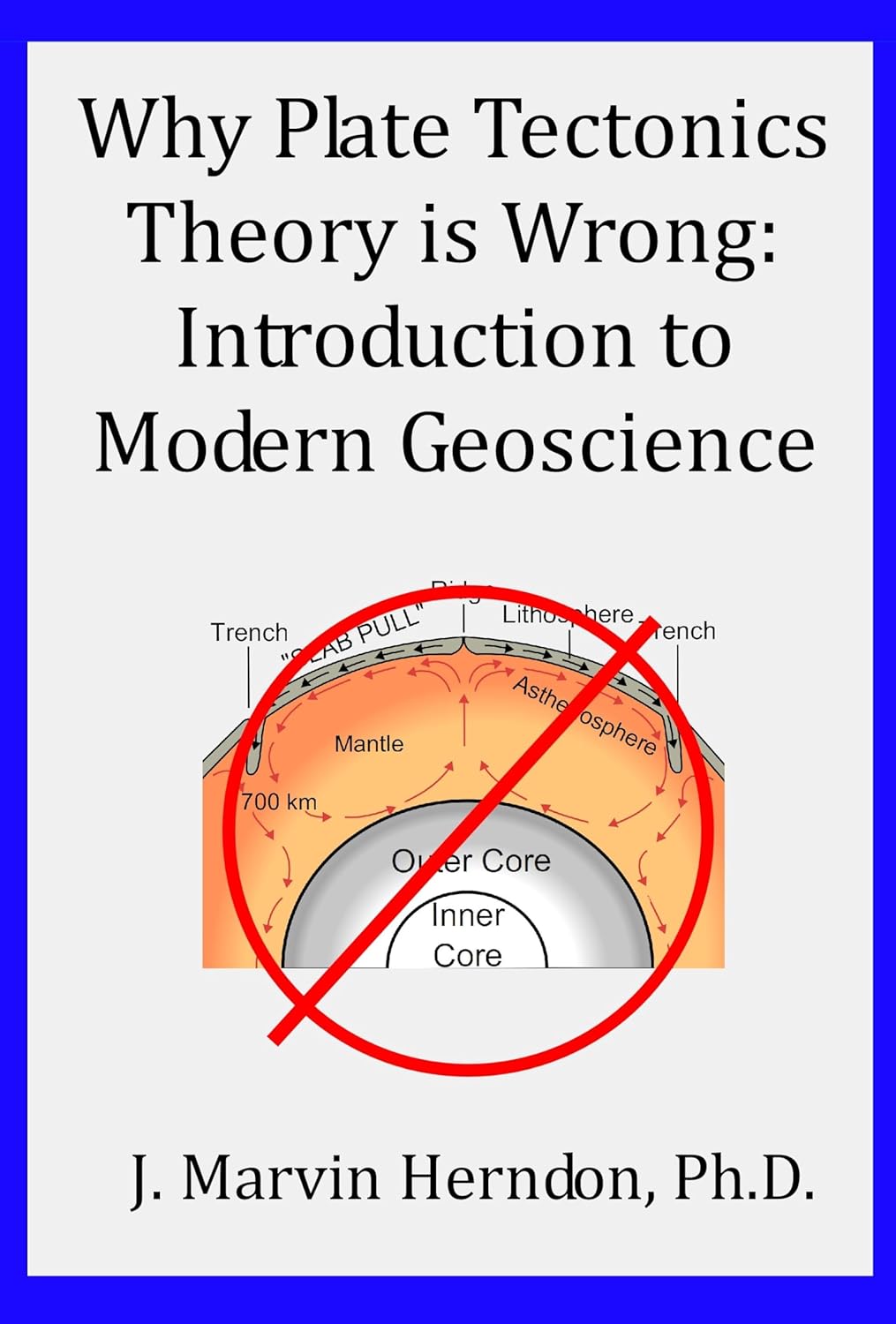
Why Plate Tectonic Theory Is Wrong: Introduction to Modern Geoscience Kindle Edition
Product details
| Management number | 220513273 | Release Date | 2026/05/03 | List Price | $90.00 | Model Number | 220513273 | ||
|---|---|---|---|---|---|---|---|---|---|
| Category | |||||||||
Science is the ever-evolving activity of replacing less-precise understanding with more-precise understanding. When a new idea comes along there should be discussion and debate. If possible, efforts should be made to refute the new idea, to show that it is not true. If the scientific community is unable to refute the idea, then the idea should be acknowledged and cited in relevant scientific literature. That way others might be able to further advance the new idea. Historically, this is the way that good science works and progressesOver my professional lifetime of half a century, I have witnessed science in America, the European Union, and the British Commonwealth increasingly abrogating long-held scientific standards and adopting non-scientific methodologies and beliefs. Sadly, each new generation of scientists becomes further removed from understanding and applying scientific standards that lead to substantive progress, at least in those areas in which I have had experience, namely, Earth, planetary sciences, and astrophysics. Yet these are the very people who write introductory textbooks.Introductory textbooks generally provide an overview which is typically the consensus view, the popular understanding that is presented as factual without pointing out its shortcomings. Usually, this broad-based introduction is the only overview students receive before concentrating on specialized areas such as seismology. In textbooks, rarely if ever does the following question arise: What is wrong with this picture? Textbooks typically do not call into question the underlying validity of the presentations they are making. Moreover, textbooks do not teach students how to make scientific discoveries.This textbook does. It presents the step-by-step logical progression of observations and discoveries that lead to a firm scientific basis for understanding Earth and the planetary sciences. And, it teaches some methods that can lead to new discoveries. For many, this will represent a new approach for learning. Some may be surprised that the subject matter differs from the consensus view represented in other textbooks. With hundreds of scientific references provided, opportunities abound for students to question the contradictions and to arrive at a better understanding of science. Read more
| XRay | Not Enabled |
|---|---|
| Language | English |
| File size | 29.3 MB |
| Page Flip | Enabled |
| Word Wise | Not Enabled |
| Print length | 269 pages |
| Accessibility | Learn more |
| Screen Reader | Supported |
| Publication date | November 7, 2025 |
| Enhanced typesetting | Enabled |
Bestseller ranking
Fruit & Nut Gifts






Customers who viewed this product also viewed
Geophysics


Correction of product information
If you notice any omissions or errors in the product information on this page, please use the correction request form below.
Correction Request Form